Chaos as Doctrine: Deconstructing the Hurricane of Trump’s Second Term
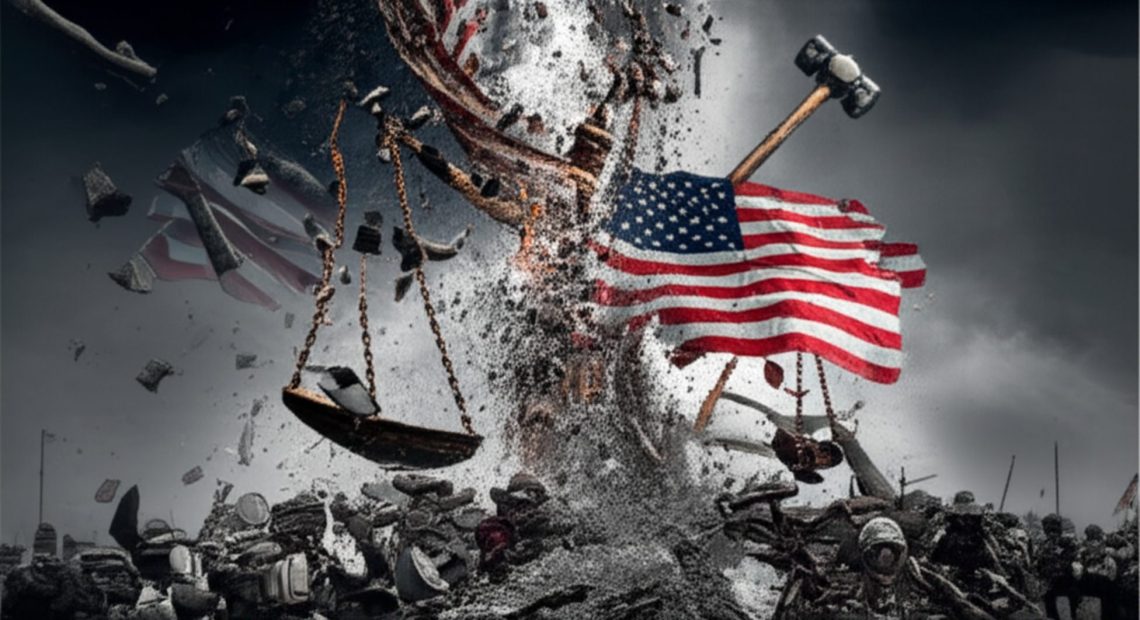
The second presidency of Donald Trump did not begin with a transition; it began with a detonation. In a whirlwind of executive orders that dismantled decades of policy in mere days, the administration has signaled a clear intent: disruption is no longer just a tactic, but the central governing doctrine. This new era, dubbed “Trump 2.0,” is characterized by an audacious and often chaotic rewriting of America’s role at home and abroad, challenging the very foundations of economic, social, and geopolitical stability. It operates with a velocity that leaves allies and adversaries alike scrambling to adapt to a world where precedent is irrelevant and unpredictability is the only constant.
Economically, the administration has launched a high-stakes war on the global trade system, anchored by the aggressive imposition of “reciprocal tariffs.” This is not a subtle negotiation but a sledgehammer approach aimed at radically reordering supply chains. The fallout has been immediate, sparking severe market volatility and forcing allies like Canada and Mexico into defensive postures. Beyond tariffs, the critical review of initiatives like the CHIPS Act signals a desire to exert direct control over key industries, pressuring global giants like TSMC to align with a muscular “America First” agenda. This strategy treats the global economy not as a system of cooperation, but as a zero-sum arena where American dominance must be reasserted by force, regardless of the collateral damage to consumers or international relationships.
Domestically, the administration is waging a parallel war on established legal and social norms. The audacious challenge to birthright citizenship, coupled with a fiercely intensified immigration crackdown led by ICE, is a clear move to reshape the nation’s demographic and legal landscape. This is amplified by the controversial mass pardons for participants in the January 6th Capitol riot, an act that critics argue undermines the rule of law for political gain. These actions, combined with a systematic effort to dismantle Diversity, Equity, and Inclusion (DEI) programs, represent a deliberate and polarizing campaign to redefine American identity and values, pushing the nation’s cultural divisions to a breaking point.
The very machinery of government is being radically re-engineered, often with a theatrical flair that blurs the line between policy and political spectacle. The creation of the “Department of Government Efficiency” (DOGE), helmed by Elon Musk, has initiated a sweeping purge of the federal workforce, justified as a war on waste but seen by many as an ideological dismantling of the civil service. This chaotic approach is shadowed by persistent allegations of corruption, with the Trump family’s ventures in cryptocurrency becoming a focal point. The controversy has grown so prominent that it prompted California Governor Gavin Newsom to propose a satirical “Trump Corruption Coin,” a symbolic gesture that nonetheless captures the public’s deep unease with the unprecedented fusion of presidential power and personal enterprise.
On the world stage, Trump’s second term has accelerated America’s retreat from multilateralism in favor of a transactional and deeply unpredictable foreign policy. Abruptly withdrawing from the World Health Organization and the Paris Climate Accord, the administration has demonstrated a profound disdain for global consensus. Relations with traditional European allies have been strained to the breaking point over disagreements on handling the war in Ukraine, while direct military intervention in the Middle East has been executed with minimal consultation. This approach is reshaping the global order, forcing nations to navigate a landscape where the United States is no longer a predictable anchor but a powerful, rogue wave.
Ultimately, the policies of Trump 2.0 are more than a list of controversial actions; they represent a fundamental experiment in governance by chaos. It is a philosophy that wagers everything on the idea that by shattering existing structures—be they trade agreements, legal precedents, or diplomatic alliances—a stronger, more dominant America will emerge. The critical question that remains is what the cost of this experiment will be. Does this path lead to a revitalized nation, or does it risk eroding the democratic foundations and international trust that, once lost, may prove impossible to rebuild?

傑西
If you want to increase your IQ, EQ, and financial intelligence, be sure to subscribe to our website! The content on our website will help you improve yourself. Imagine yourself leveling up in a game, making yourself stronger!If you find this article helpful for you or your loved ones, please share it with others so that more people can benefit from it!