The Ironman’s Shackles and the New World Map: The Great Wealth Migration Composed by Musk, Tether, and the Fed
When Tesla’s board has to explain to the world why a compensation package potentially worth a trillion dollars is necessary to retain their CEO, a profound structural shift has already emerged. This is no longer simple incentive, but a public tug-of-war. At one end of the rope is the Wall Street-spotlighted Tesla, and at the other is Elon Musk’s ever-expanding private empire. SpaceX and xAI, two unlisted behemoths, are swelling at an astonishing rate, and the wealth represented by their valuations has quietly surpassed the value of Musk’s holdings in Tesla. The essence of this tug-of-war reveals a harsh reality: Tesla, the global leader in electric vehicles, now finds itself needing to compete with its “brother companies” for its founder’s energy and attention. Musk himself has admitted that two-thirds of his pain comes from managing Tesla, a statement that perfectly captures the immense pressure and constraints of being the CEO of a public company. This is no longer a story about personal wealth, but a prelude to a shift in the core of power. The creative focus of our time’s most visionary entrepreneur is quietly moving away from the strict oversight of public markets and the scrutiny of quarterly reports, into a more private, agile, and imaginative domain.
Musk’s vision has never been limited to Earth or Mars; he is also exploring the uncharted frontiers of digital finance. His frequent “pumping” of cryptocurrencies is not a fleeting speculation but stems from a deeper philosophical consideration. At “The ₿ Word” conference, he disclosed that he and his companies hold assets like Bitcoin and Ethereum, tracing his philosophy back to the early days of founding PayPal. In his view, traditional finance is an inefficient “information system,” while cryptocurrency, especially Bitcoin, holds the promise of becoming a decentralized, censorship-resistant alternative. This explains why, against the backdrop of negative interest rates in Europe, he would rather put company assets into Bitcoin than watch them silently evaporate in a bank account. However, this tech prophet also faces the collision of ideals and reality. His concerns about the energy consumption of Bitcoin mining led Tesla to temporarily suspend accepting it as payment, reflecting his internal struggle between advancing a technological revolution and shouldering social responsibility. Musk’s every word and deed not only affects the price fluctuations of hundreds of billions of dollars in assets but also blurs the lines between personal belief, corporate strategy, and the global market. He is single-handedly forcing a once-niche technological concept onto the agenda of the mainstream world.
While Musk rallies support for the crypto world with his personal charisma, a much larger and more secretive financial behemoth—Tether—is quietly building the underlying infrastructure of this new world. The issuer of the USDT stablecoin boasts over five hundred million users and profitability that surpasses many Wall Street giants. Its valuation, reaching as high as five hundred billion dollars, puts it in the same league as top unicorns like OpenAI and SpaceX. Tether’s rise is a classic epic of “barbaric growth.” It did not choose the top-down design path of Facebook’s Libra, which sought to confront central banks head-on, nor did it cautiously embrace regulation like its competitor Circle. Instead, Tether penetrated the capillaries of emerging markets in Asia, Africa, and Latin America, targeting the corners forgotten by the traditional financial system. In countries plagued by high inflation, currency depreciation, and difficult cross-border payments, USDT has become a digital life raft for local populations to protect their wealth and conduct transactions. It has built a grassroots and resilient distribution network through countless physical touchpoints on streets and in alleys. Tether’s success is not just a victory of technology but a precise strike against the global reality of financial inequality. The parallel “crypto-dollar” system it is building is challenging the existing international monetary order and forcing us to reconsider: in the digital age, to whom does monetary sovereignty truly belong?
Whether it’s the expansion of Musk’s private empire or Tether’s global financial layout, all of this is happening against a grander backdrop: the monetary policy of the world’s central banks. The interest rate decisions of the U.S. Federal Reserve act as the invisible hand controlling the tides of global capital flow. Looking back, the “panic-induced rate cuts” and “unlimited quantitative easing” triggered by the pandemic in 2020 injected trillions of dollars of liquidity into the market with unprecedented force. It was this deluge of capital that not only pushed the U.S. stock market to new highs but also provided ample fuel for Bitcoin’s epic bull run from $3,800 to $69,000. Today, we are at the beginning of a new rate-cutting cycle. Although this time the model resembles a more moderate “preventive rate cut,” the core logic remains the same: the floodgates of capital are slowly opening. Where will this impending wave of liquidity flow? Will it pour into public market stars like Tesla, or enter the mysterious realms of SpaceX and xAI through private funding? Or will it enter the crypto market through the compliant channels of Bitcoin ETFs, and then seep into every corner of DeFi via stablecoins like Tether? The Fed is setting the rules and chips for this global wealth game, and Musk and Tether are simply the master players who know best how to position themselves on this grand chessboard.
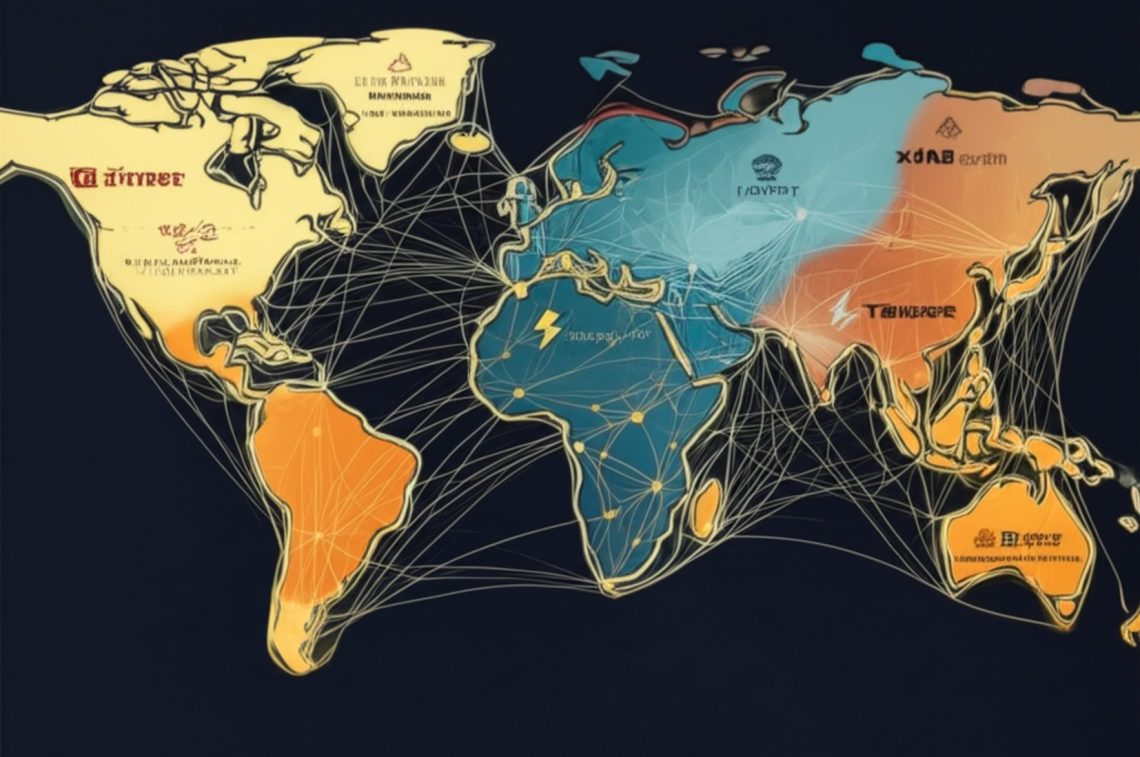
We are living in an era where the core of power and value is undergoing a radical reshaping. The traditional model of wealth creation, reliant on publicly traded companies under strict regulation, is facing an unprecedented challenge—even an industry giant like Tesla can become a golden “shackle” in the eyes of its founder. The new centers of power are rapidly shifting to two extremes: on one end, private, deep-tech empires driven by technological vision and highly centralized, represented by Musk; on the other, the decentralized, globalized digital financial networks that operate on the fringes of regulation, built on Bitcoin and Tether. Elon Musk masterfully stands at the intersection of these two new worlds; he is both the king of a private empire and the evangelist of digital finance. The business and financial landscape of the next decade will be defined by the interaction, collision, and fusion between these emerging forces and the traditional system. As the monetary flood from central banks arrives again, the real question is no longer about the rise or fall of a single asset, but how wealth, power, and influence will be redistributed across these old and new continents. This is a great migration, an era filled with uncertainty yet brimming with infinite possibilities, and we are all witnesses to this historic tide.

傑西
If you want to increase your IQ, EQ, and financial intelligence, be sure to subscribe to our website! The content on our website will help you improve yourself. Imagine yourself leveling up in a game, making yourself stronger!If you find this article helpful for you or your loved ones, please share it with others so that more people can benefit from it!