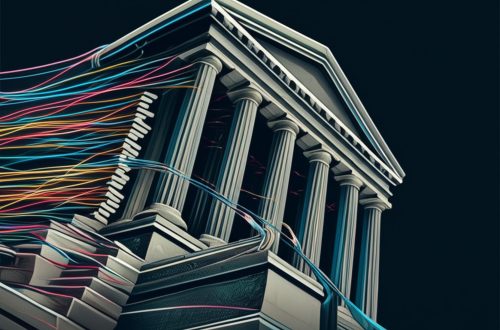

The Political-Financial Singularity: WLFI’s Debut and the Dawn of a Crypto Dynasty
The world of cryptocurrency is poised on the brink of a landmark event, the public trading debut of World Liberty Financial’s WLFI token.
This is far more than a typical asset launch; it represents a bold fusion of high-stakes American politics, established financial power, and the disruptive potential of decentralized technology.
With the Trump family’s name attached, WLFI’s initial token unlock is not merely a test of market liquidity but a referendum on whether a political brand can serve as the bedrock for a new financial ecosystem.
The question on every investor’s mind is whether this unprecedented experiment will redefine the intersection of power and crypto or become a cautionary tale of hype over substance.
Observing WLFI’s strategic alliances reveals a masterfully orchestrated plan to construct a sprawling digital empire before the first token is even publicly traded.
The project has methodically woven its USD1 stablecoin into the fabric of the crypto universe through a network of carefully selected partners.
By integrating with Real World Asset (RWA) platforms like Ondo Finance and Plume, DeFi service providers such as Lista DAO and Dolomite, and even expanding its reach into the Solana ecosystem via Raydium and Kamino, WLFI is executing a multi-front strategy.
This isn’t a random collection of partnerships; it is a calculated campaign to establish USD1 as an indispensable asset, creating a ripple effect that could lift the entire ecosystem if the core project succeeds.
The project’s credibility is significantly bolstered by the powerful figures and institutions operating behind the scenes.
The involvement of crypto behemoths like Justin Sun and DWF Labs, alongside traditional real estate titan Steve Witkoff, signals that WLFI is not a fleeting meme coin but a venture backed by formidable capital and market-making expertise.
These players bring not just funding but a deep understanding of market dynamics and narrative creation, transforming WLFI from a mere concept into a heavily-backed contender.
Their presence suggests a coordinated effort to legitimize the “Political Finance” (PoliFi) sector, using the Trump brand as the ultimate catalyst for mainstream attention and investment.
The narrative surrounding WLFI’s valuation speaks volumes about the market’s speculative fervor and its belief in the power of branding.
The leap from an initial sale price of $0.015 to an over-the-counter valuation exceeding $0.24 is a testament to the immense premium placed on its political affiliation.
This exponential growth reflects a market betting that the Trump name can command sustained attention and drive capital inflows in a way no purely technical project ever could.
Unlike the volatile trajectory of purely satirical meme coins, WLFI’s strategy of building a foundational financial infrastructure suggests an ambition to convert political celebrity into durable economic utility, creating a potentially more resilient, albeit controversial, investment thesis.
As WLFI transitions from a private fundraising entity to a publicly traded asset, it stands as a critical test for the future of digital finance.
The launch will serve as a bellwether, not just for WLFI’s price, but for the viability of the entire PoliFi narrative and the projects within its orbit.
It forces us to confront profound questions about the nature of decentralization when intertwined with such a centralized and powerful political dynasty.
Can an ecosystem built on a political figurehead truly embody the core tenets of crypto, or does it signal a new era where blockchain technology becomes another tool in the arsenal of traditional power structures.
The outcome of this grand experiment will undoubtedly shape the discourse on crypto’s role in society for years to come.

傑西
If you want to increase your IQ, EQ, and financial intelligence, be sure to subscribe to our website! The content on our website will help you improve yourself. Imagine yourself leveling up in a game, making yourself stronger!If you find this article helpful for you or your loved ones, please share it with others so that more people can benefit from it!